

Houffalize - Battle of the Bulge
Updated: Jan 12, 2025
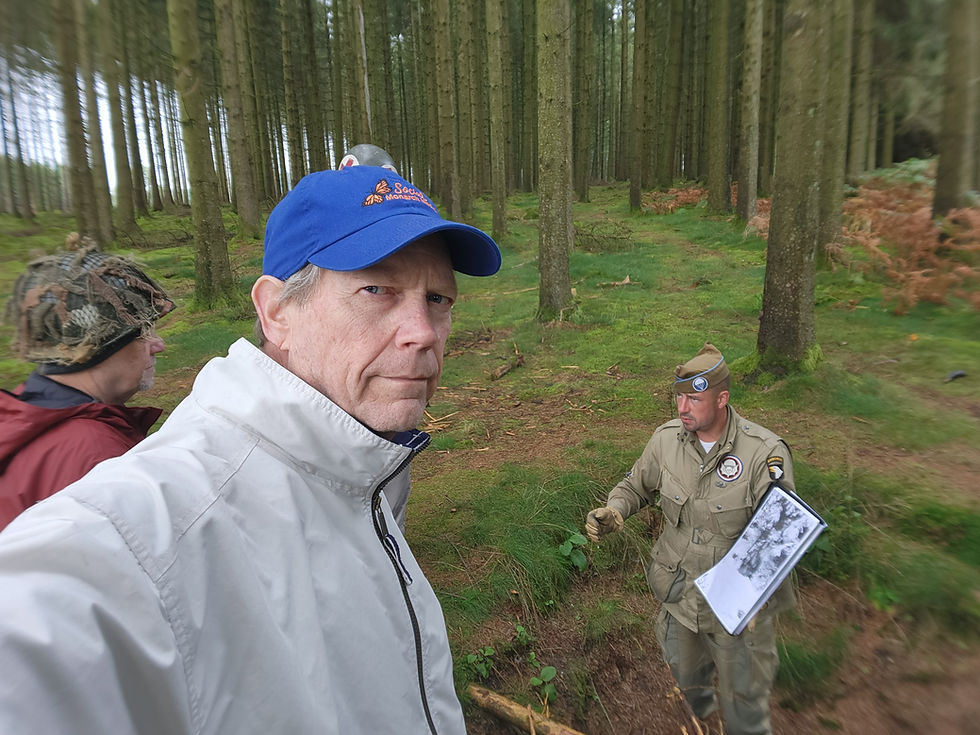
On a chilly day in September 2024, I had the honor of visiting the historic town of Houffalize with my friends Aldon Collier and John Vranas. Houffalize, a picturesque crossroads town on the Ourthe River, lies at the heart of one of the most pivotal and brutal battles of World War II—the Battle of the Bulge. The German occupation, beginning on December 20, 1944, and lasting until January 16, 1945, placed this small town squarely in the line of fire between the advancing Allied forces and the desperate German troops.
As we walked through the streets of Houffalize, it was impossible to ignore the weight of its history. The Battle of the Bulge, also known as the Ardennes Offensive, tore through the region in December 1944. What had once been a hopeful, liberated Belgium turned into a nightmarish battleground just as civilians were preparing for Christmas in their newfound freedom after Belgium’s liberation in September of that same year.
Houffalize became a strategic stronghold, a key point in a hilly, marshy terrain crucial for tank movement. For weeks, German forces held the town, and the Allies launched repeated strikes to reclaim it. This small town bore the brunt of Allied air raids as they attempted to dislodge the German forces, reducing Houffalize to rubble. Over 350 homes were destroyed, and tragically, 189 civilians perished in the onslaught.
The civilian toll during the Battle of the Bulge was immense. The brutality of the German forces was seen across many towns in the Ardennes. The SS and SD committed atrocities, executing civilians in cold blood, as witnessed in the nearby towns of Stavelot and Bande. In total, over 250 Belgian civilians were murdered by German forces during this period.
But it wasn’t just the German brutality that claimed lives. Allied bombings, essential for the overall victory, also resulted in significant civilian casualties, leaving Belgian civilians caught between a rock and a hard place. Houffalize was one of many towns, including Bastogne, Malmedy, and Saint Vith, to experience savage fighting and devastating destruction. The Allied bombings turned towns into ruins, reducing homes and infrastructure to mere shadows of their former selves.
During the fighting, civilians sought refuge in thick-walled stone cellars, desperate to escape the horrors above ground. With limited food, inadequate clothing, and no heating, they faced one of the coldest winters on record under conditions that can only be described as harrowing. Yet, for many, even these shelters couldn’t protect them from the devastation raining down from the skies.
In the aftermath of the war, towns like Houffalize rebuilt, but the scars ran deep. The ground itself remained deadly, with the region littered with hundreds of thousands of unexploded munitions. Even decades later, the echoes of this battle continue to haunt the land.
Our visit to Houffalize served as a sobering reminder of the costs of war. The stories of those who suffered and survived, the resilience of the human spirit, and the sheer devastation that engulfed this small town are impossible to forget. Today, Houffalize stands as a testament to both the horrors of conflict and the unyielding hope of rebuilding from its ashes.
As we reflect on this historic town and its role in the Battle of the Bulge, it is crucial to remember not only the military triumphs and losses but also the lives of civilians who found themselves in the crossfire of one of World War II’s most ferocious battles.
Comments